











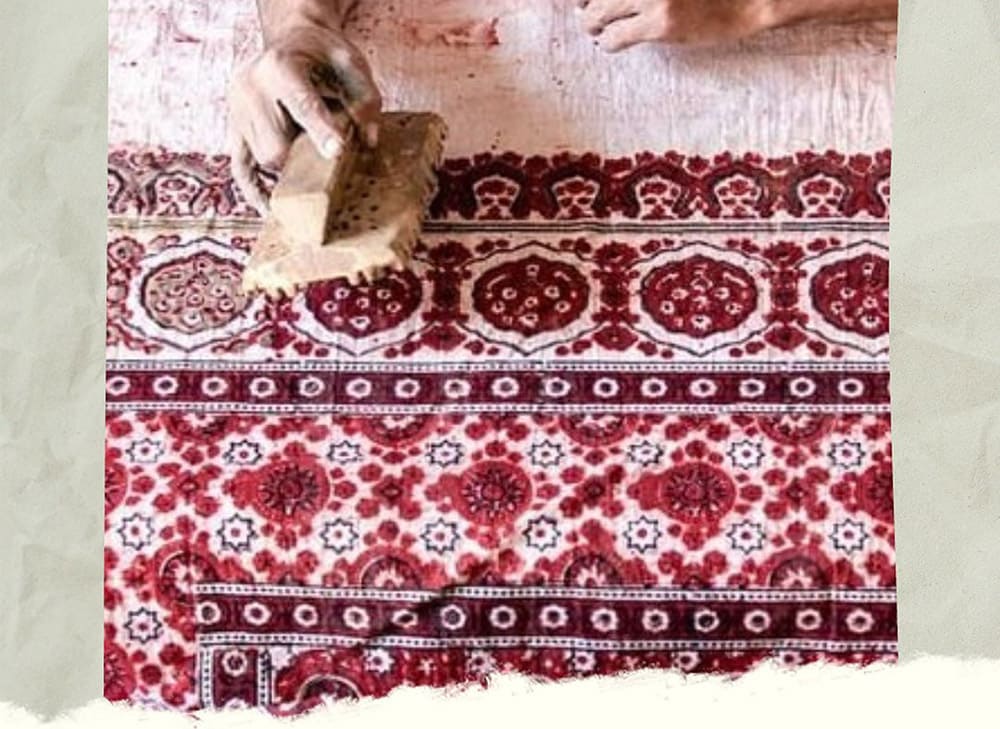
Ajrak, a traditional block-printed textile, has been a cultural icon since the Indus Valley Civilization. Its intricate patterns, dyed with natural agents, carry significant meaning that changes subtly with variations in color and design.
The Origin and Etymology of Ajrak
The term “Ajrak” is derived from Persian and Sanskrit roots, symbolizing longevity and its blue-indigo color. Evidence of Ajrak’s existence dates back to the Mohenjo-Daro period, with the bust of the Priest-King wearing a fabric resembling modern-day Ajrak.
Ajrak’s Craftsmanship and Patterns
Ajrak’s geometric patterns are block-printed using wooden blocks made from the acacia tree, native to Sindh. The authenticity and value of Ajrak depend on its adherence to traditional methods, with natural dyes like indigo and clay lending a unique vibrancy.
Cultural and Social Significance
Ajrak is a versatile garment in Sindh, worn as turbans, shawls, or dupattas by men, women, and children. It signifies honor and hospitality, often given as a gift to guests. This time-honored textile remains part of both formal attire and everyday life.
Modern Influence and Popularity
Despite modern fabric printing methods, naturally-made Ajraks remain highly valued. International fashion brands like Forever 21 have even incorporated Ajrak patterns, showcasing its global appeal.
The Evolution of Ajrak Patterns
Ajrak’s patterns were influenced by the Mughal era, adopting geometric designs that mirrored Central Asian tile art. The repeat patterns and symmetry reflect the Islamic concept of ‘Mizan’—balance and order—incorporating environmental elements into its design.
Ajrak’s Role in Sindhi Culture and Beyond
Ajrak is more than just a textile; it’s deeply rooted in Sindhi culture, from cradle to grave. Its use by prominent figures like Alan Faqeer and Abida Parveen has made Ajrak an enduring part of Pakistani culture and fashion, both locally and globally.
Ajrak: A Story of Timeless Craftsmanship
A popular story attributes the name Ajrak to a king who was enamored with a blue block-printed sheet, instructing his servant to “Aaj Rakh” (keep it for today). This anecdote symbolizes the timeless beauty of Ajrak, preserving its legacy for future generations.










Discussion about this post