











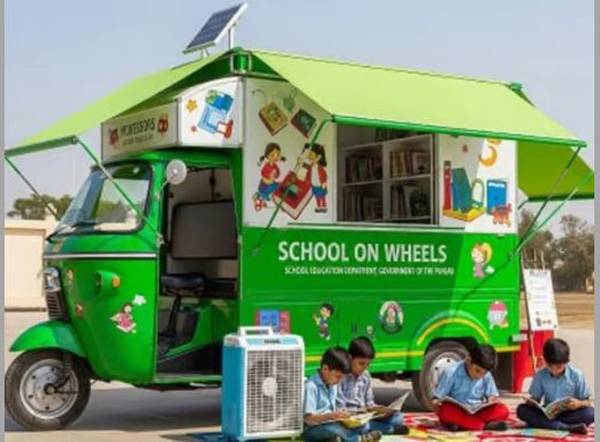
Punjab Chief Minister Maryam Nawaz has launched two innovative initiatives. “School on Wheels” and “Library on Wheels”, Their main aim is to bring education to remote areas. These solar-powered mobile units are eco-friendly and cost-effective. More so they can easily reach to remote areas where there is a dire need of education and creating awareness about the importance of education.
How “School on Wheels” Works?
The “School on Wheels” project provides primary education. Solar-powered rickshaws travel to underserved communities. They come with collapsible chairs and learning tools. Teachers conduct classes in open spaces.
Features of “Library on Wheels”
The “Library on Wheels” offers books, art supplies, and toys. It encourages reading and creativity in children. The mobile library visits villages with limited access to educational resources.
Eco-Friendly & Sustainable Initiative
Both projects use solar energy. This reduces carbon emissions. The rickshaws are designed for easy mobility. They can reach areas with no school buildings.
Boosting Literacy in Punjab
The initiative aims to improve literacy rates. It ensures quality education reaches every child. Punjab government plans to expand the project. More units will be added in the coming months. Maryam Nawaz emphasized equal learning opportunities. No child should be left behind due to location. The project aligns with Punjab’s education reforms.
Public Response & Future Plans
Local communities have welcomed the initiative. Parents appreciate accessible education for their children. The government will monitor progress closely. More innovative solutions are in the pipeline. Punjab’s “School on Wheels” and “Library on Wheels” are revolutionary steps. They bridge the education gap in remote areas. Solar-powered learning ensures sustainability. This initiative sets an example for other provinces.