
















A Water-Powered Cooking Revolution
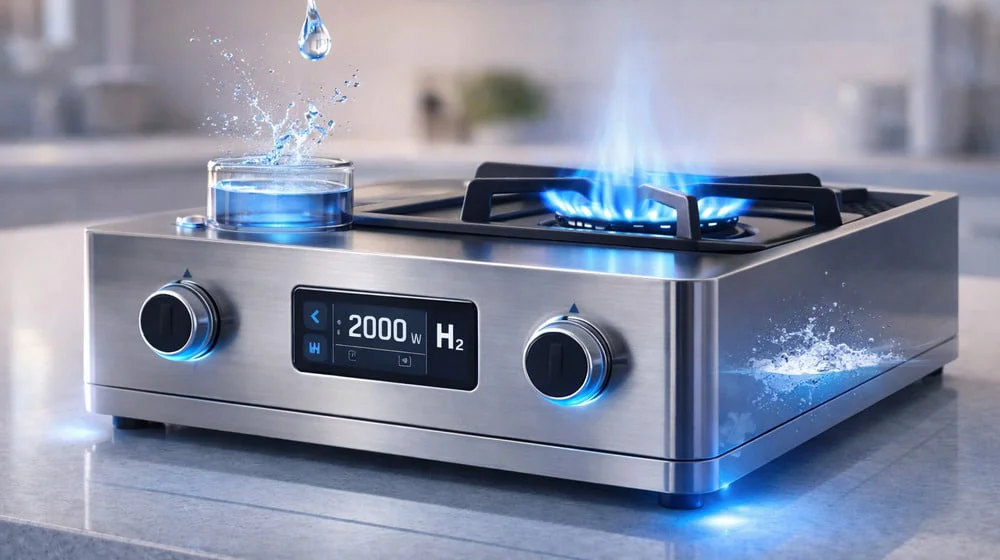
As gas shortages continue to disrupt households and businesses worldwide, a groundbreaking innovation is gaining attention a new kitchen stove that uses water to cook food instead of natural gas. This hydrogen-based system, developed by Greenvize, could redefine how we approach everyday cooking. With rising fuel costs and unreliable supply, many are asking: could this be the future of kitchens?
How the Water-Based Stove Works
Turning Water into Fuel
The stove generates hydrogen directly from water using electricity. With just a small amount of purified water and around 1 kWh of power, it can produce enough fuel for hours of cooking. Unlike traditional systems, it doesn’t rely on external gas pipelines or cylinders.
Clean Energy with Added Benefits
During operation, the system also releases oxygen, potentially improving indoor air quality. It can even integrate with solar panels, making it useful in areas with unstable electricity or limited gas access.
Is It a Feasible Alternative?
While the concept is promising, questions remain about efficiency, cost, and scalability. Converting electricity into hydrogen and then burning it involves energy loss compared to direct electric cooking. However, in regions facing severe gas shortages, this flexibility could outweigh the drawbacks.
Innovation Driven by Necessity
This water-powered kitchen stove represents a bold step toward sustainable cooking. Whether it becomes mainstream depends on affordability and adoption but it clearly shows how innovation thrives when resources become scarce.