












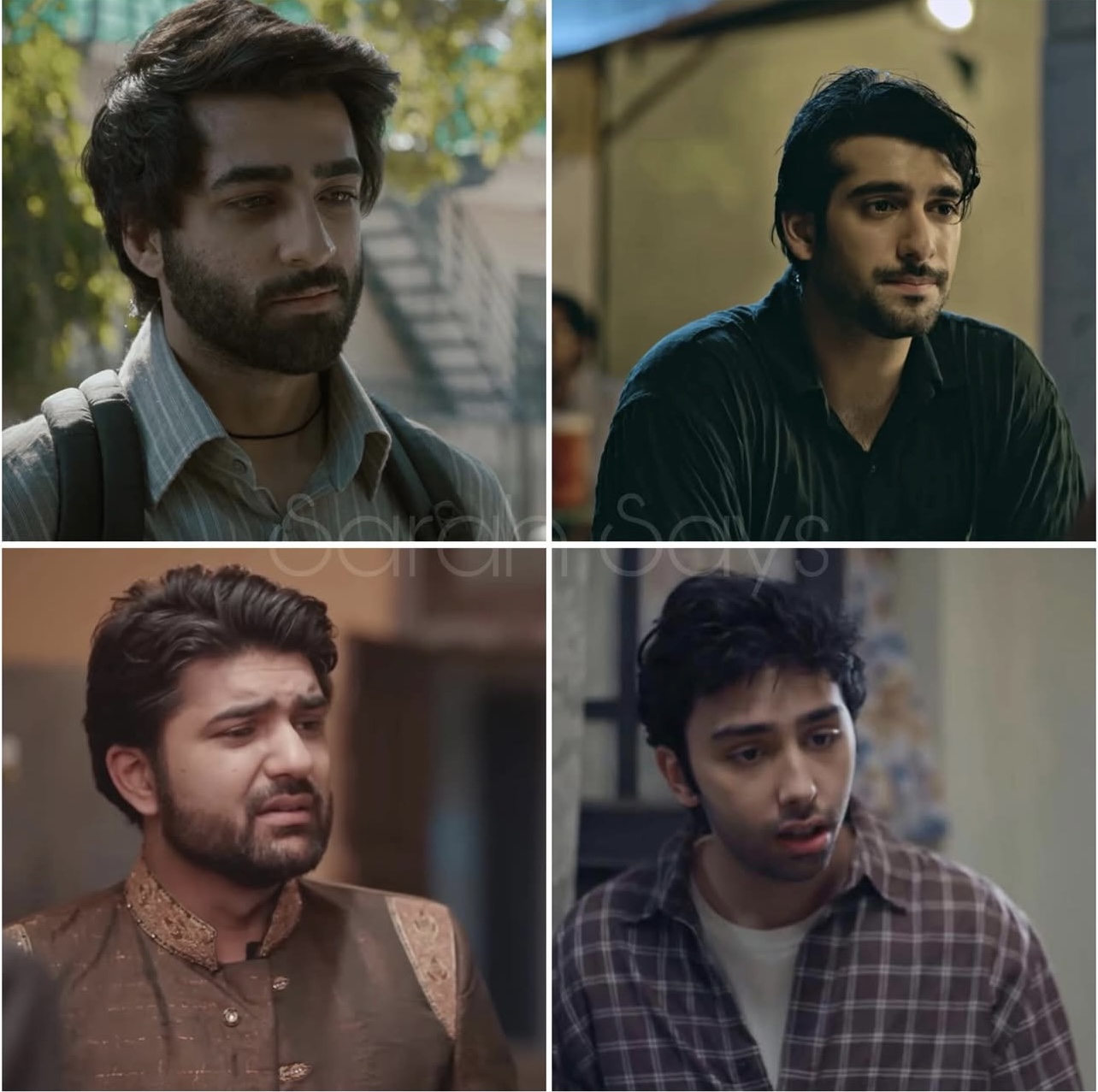
The toxic hero is finally losing his grip on Pakistani television. For years, we watched the same formula. A hero who yelled. Who grabbed wrists. Who stalked young girls until they surrendered.
A new era of masculinity in Pakistani Dramas!
We are witnessing a new era of masculinity. Men who cry. Men who stumble over their words. Moreover men who aren’t afraid to fall. And audiences cannot get enough of it.
The Old Formula in Pakistani Dramas: Loud, Aggressive, and Exhausting
Let us be honest about where we came from. Recent Pakistani dramas have often romanticized abuse. The hero was violent. The heroine endured. And by episode 30, everyone called it love. Think of Danish Taimoor’s characters. In Kaisi Teri Khudgarzi, he played Shamsher. A rich man who stalked and harassed a middle-class woman. He forced her into marriage.
The drama later framed him as the ultimate lover. Or Tere Bin. Wahaj Ali played a feudal lord with unchecked authority. Possessiveness was packaged as passion. These heroes broke car windows. They threatened families. They silenced women. And young audiences began fantasizing about becoming these men.
Three Performances Leading the Change
Let us talk about three actors who are defining this movement right now.
Aashir Wajahat as Subuk in Kafeel
Aashir Wajahat joined the cast of Kafeel on ARY Digital in January 2026. He plays Subuk. And Subuk is winning hearts everywhere. He is the son of Zeba (Sanam Saeed), growing up in a dysfunctional household. He has seen his parents’ marriage crumble. But instead of becoming bitter, he becomes a shield. A protector. A supportive brother to his mother .
In one powerful scene, Subuk tells a girl named Daneen: “My life will never be easy. I will never drag a girl like you into my hardships.”
He spoke honestly about his financial struggles. He said he would marry someone from his own background. No manipulation. No false promises. Just raw, humble truth .
Nameer Khan as Faraz in Aik Aur Pakeeza
Aik Aur Pakeeza is Written by Bee Gul and directed by Kashif Nisar, the drama tackles heavy themes. The story follows Pakeezah (Sehar Khan), a law student whose private video is leaked. She is forced into marriage with Faraz (Nameer Khan) .
But here is where it gets interesting.
Faraz is not the typical aggressive hero. He is caught in a situation he did not create. The drama does not celebrate him. It shows him struggling. Making mistakes. Trying to do right. Nameer Khan’s performance is layered. His body language changes after the trauma. He is not a savior. He is a man learning. Falling. Getting back up. This is not the perfect hero. This is the human hero.
Shuja Asad as Salman in Doctor Bahu
Doctor Bahu stars Kubra Khan as Dr. Fajr, an accomplished doctor who marries into a traditional family. Shuja Asad plays Salman (also called Sunny). And he is refreshingly normal.
He rescues pets. He runs a four-wheeler showroom. Salman has business ideas that his father rejects. He does not stalk anyone. He does not break anything. Most importantly just exists as a decent, relatable young man navigating family expectations. The drama explores how women’s careers are celebrated during proposals but restricted after marriage. Salman is caught in the middle. He is not perfect. But he is trying. And that feels real.
What Makes These Heroes Different?
Let us break down the new formula. They do not yell. Volume is not power. Silence can be strength. They do not stalk. No means no. Respect is not negotiation. They cry. Parwarish showed boys wiping away tears. Viewers did not mock them. They hugged their screens.
They give up. Sometimes, walking away is the bravest thing. They stumble. Subuk admits his financial limits. Faraz fumbles through trauma. Salman gets rejected. Writers like Bee Gul and Umera Ahmed are crafting narratives that challenge patriarchal norms. Directors like Kashif Nisar and Meesam Naqvi are prioritizing ethical storytelling.
More Links!
Aashir Wajahat debut in Kafeel Drama: A Tale of Duty and Strength for Dysfunctional families!
Aik Aur Pakeeza Ends on a Powerful Note: Speaking Up Is Always Right