










Ear wax, or cerumen, is a natural substance produced by glands in the ear canal, and it plays an important role in maintaining ear health. It acts as a protective barrier against dust, debris, and microorganisms, preventing them from entering the inner ear. Additionally, ear wax lubricates the ear canal, helping to keep the skin moist and reducing the risk of itching and irritation. It also has antibacterial properties that help inhibit the growth of harmful bacteria and fungi. Given these essential functions, removing ear wax at home may not be the best idea.
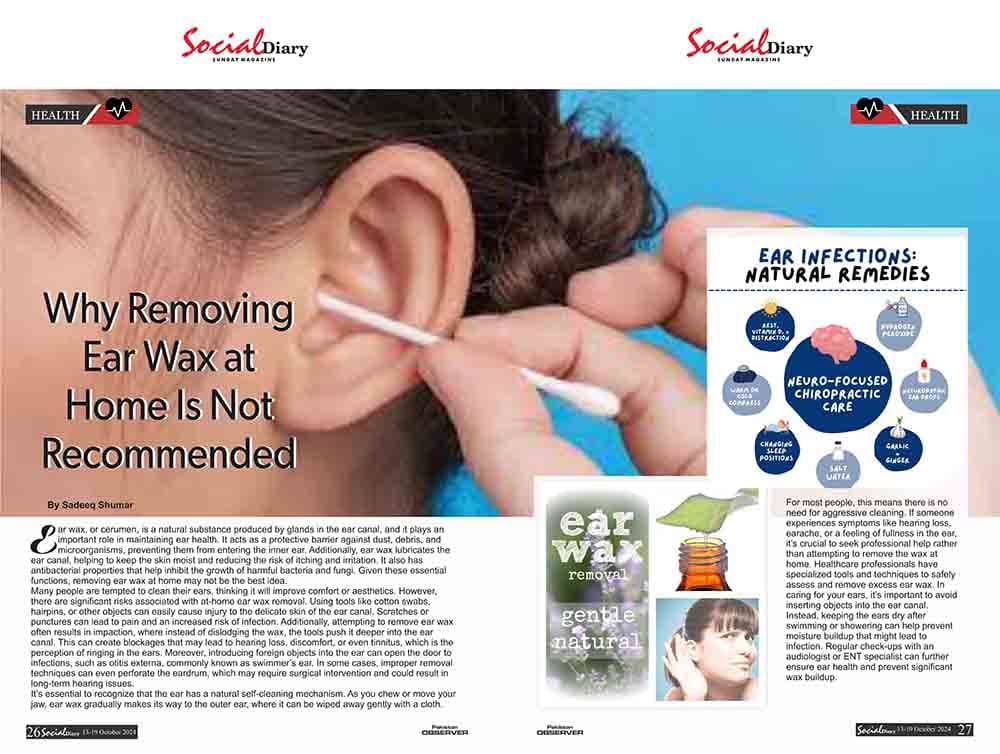
Many people are tempted to clean their ears, thinking it will improve comfort or aesthetics. However, there are significant risks associated with at-home ear wax removal. Using tools like cotton swabs, hairpins, or other objects can easily cause injury to the delicate skin of the ear canal. Scratches or punctures can lead to pain and an increased risk of infection. Additionally, attempting to remove ear wax often results in impaction, where instead of dislodging the wax, the tools push it deeper into the ear canal. This can create blockages that may lead to hearing loss, discomfort, or even tinnitus, which is the perception of ringing in the ears. Moreover, introducing foreign objects into the ear can open the door to infections, such as otitis externa, commonly known as swimmer’s ear. In some cases, improper removal techniques can even perforate the eardrum, which may require surgical intervention and could result in long-term hearing issues.
It’s essential to recognize that the ear has a natural self-cleaning mechanism. As you cew orh move your jaw, ear wax gradually makes its way to the outer ear, where it can be wiped away gently with a cloth. For most people, this means there is no need for aggressive cleaning. If someone experiences symptoms like hearing loss, earache, or a feeling of fullness in the ear, it’s crucial to seek professional help rather than attempting to remove the wax at home. Healthcare professionals have specialized tools and techniques to safely assess and remove excess ear wax. In caring for your ears, it’s important to avoid inserting objects into the ear canal. Instead, keeping the ears dry after swimming or showering can help prevent moisture buildup that might lead to infection. Regular check-ups with an audiologist or ENT specialist can further ensure ear health and prevent significant wax buildup.